
Election Coverage in India: How 5G Streaming and Broadcast Tech Are Redefining Live Reporting and Media Innovation
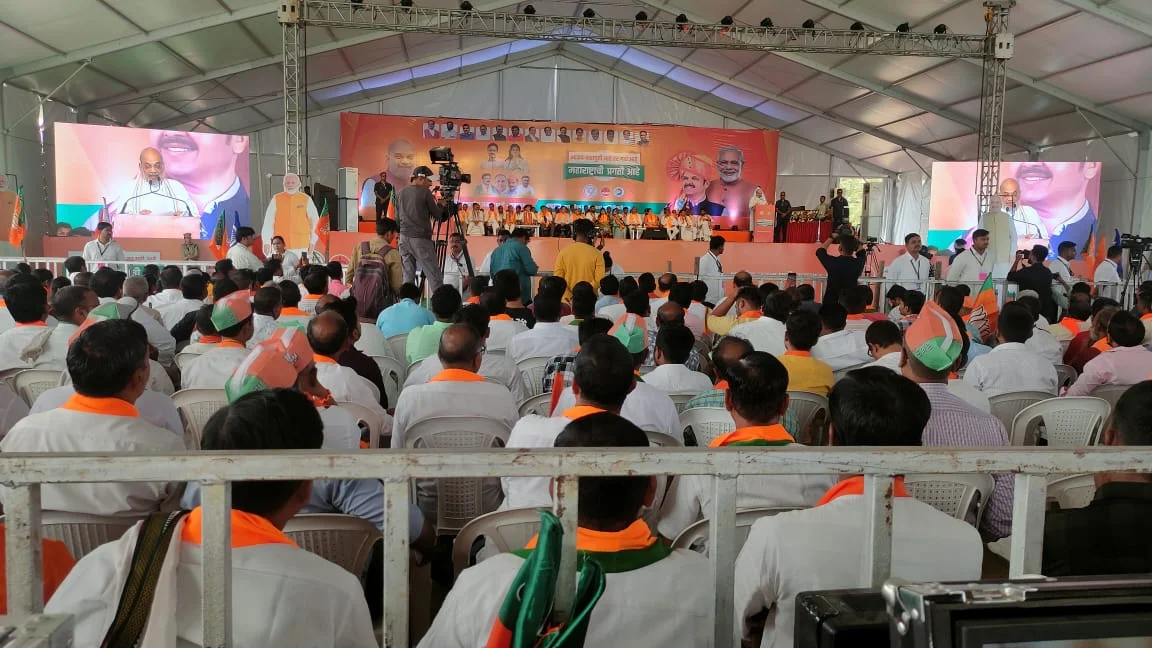
Covering elections in India has never been a simple broadcast exercise. It unfolds across crowded city centres, remote constituencies, unpredictable schedules, and moments where events change faster than crews can relocate. During the recent General and State Elections, the scale and intensity of live reporting exposed a clear reality. Traditional contribution models were no longer enough.
What emerged instead was a more flexible, mobile, and resilient way of delivering live news. At the heart of that shift was LiveU, whose IP-based transmission technology quietly became a core part of how election stories reached viewers across the country.
This was not about spectacle or novelty. It was about enabling broadcasters, journalists, and political communicators to stay live, stay reliable, and stay relevant in environments where certainty is rare.

Reporting on the Move, Without Compromise
Election coverage rarely allows crews to settle into one location. A morning rally gives way to a roadside interaction. Polling booths stretch across districts. Counting centres fill with tension and movement. In this cycle, broadcasters leaned heavily on field units designed for exactly this kind of unpredictability.
By bonding multiple cellular connections in real time, these systems allowed reporters to transmit stable live feeds while constantly on the move. Whether operating from a dense crowd or a quieter rural setting, crews were no longer forced to choose between speed and quality. High-definition and 4K contribution became consistent, not conditional.
Equally important was scale. Multi-camera setups enabled richer storytelling from the field, while compact units gave solo reporters the freedom to move fast without sacrificing broadcast standards. The result was coverage that felt immediate and immersive, rather than constrained by logistics.

A Shift in How Political Messages Travel
The elections also highlighted how political communication itself is changing. Campaign teams and leaders increasingly relied on live digital channels to speak directly to voters, often outside the framework of traditional broadcast schedules.
Live streaming tools made it possible to share speeches, announcements, and constituency visits as they happened, with minimal technical friction. This approach offered two clear advantages. First, it allowed messages to reach audiences instantly. Second, it ensured consistency in delivery, regardless of location.
For leaders campaigning in smaller towns or remote regions, this reliability mattered. The same level of clarity and stability available in metropolitan centres could now be achieved elsewhere, narrowing the gap between national visibility and regional engagement.
Regional Newsrooms Find Their Voice
Perhaps the most telling change was seen among regional and digital-first news platforms. Many local outlets entered the election season with limited live production capabilities, often relying on smartphones for streaming.
This election cycle marked a turning point. As these platforms adopted professional contribution workflows, the difference was evident almost immediately. Live feeds became sharper. Audio stabilized. Coverage stayed online during peak moments instead of dropping out.
For audiences, this translated into greater trust. For newsrooms, it meant credibility. In several cases, stronger live coverage supported measurable growth in viewership and subscriber engagement during the elections.
What stood out was not just better technology, but a growing confidence among smaller teams that they could compete on quality without operating at national broadcaster scale.
ARK Infosolutions and the Reality of Execution
Large-scale live coverage does not succeed on equipment alone. It depends on preparation, training, and the ability to respond when conditions change. This is where ARK Infosolutions played a decisive role.
As the authorized distributor for LiveU in India, ARK supported broadcasters, political teams, and digital publishers throughout the election period. This included deployment planning, configuration support, operational guidance, and real-time troubleshooting when it mattered most.
LiveU-certified engineers provided both field and remote assistance, helping teams stay live through long broadcast days and high-pressure moments. The value here was practical rather than visible. Problems were resolved quickly. Workflows stayed intact. Coverage continued.
ARK’s involvement reflected a broader responsibility in the ecosystem. Bridging advanced broadcast technology with on-ground realities across diverse production environments in India.
Why Reliability Became the Defining Factor
Elections test every assumption in live production. Networks get congested. Locations change without notice. Timelines compress. Under these conditions, reliability is not a feature. It is the foundation.
LiveU’s contribution systems proved dependable across these variables, which is why they became a preferred choice during the election cycle. When combined with consistent local support, they allowed content teams to focus on editorial judgment rather than transmission risk.
That confidence was reflected in the volume and continuity of live coverage delivered across the country.
What This Election Revealed About the Future
The recent elections offered more than political outcomes. They revealed how live broadcasting in India is evolving. IP contribution, cellular bonding, and cloud-enabled workflows are no longer emerging tools. They are now central to how large, distributed events are covered.
As broadcasters, political communicators, and regional publishers continue to adapt, the role of platforms like LiveU and partners like ARK Infosolutions will remain critical. Not as visible participants, but as enablers of access, reliability, and scale.
The future of live election coverage will depend on agility and trust. This election cycle showed that both can be achieved when technology and execution align.